ICYMI From The New York Times: Republicans in Ohio Are Worried About Turnout. Here’s What They’re Doing About it.

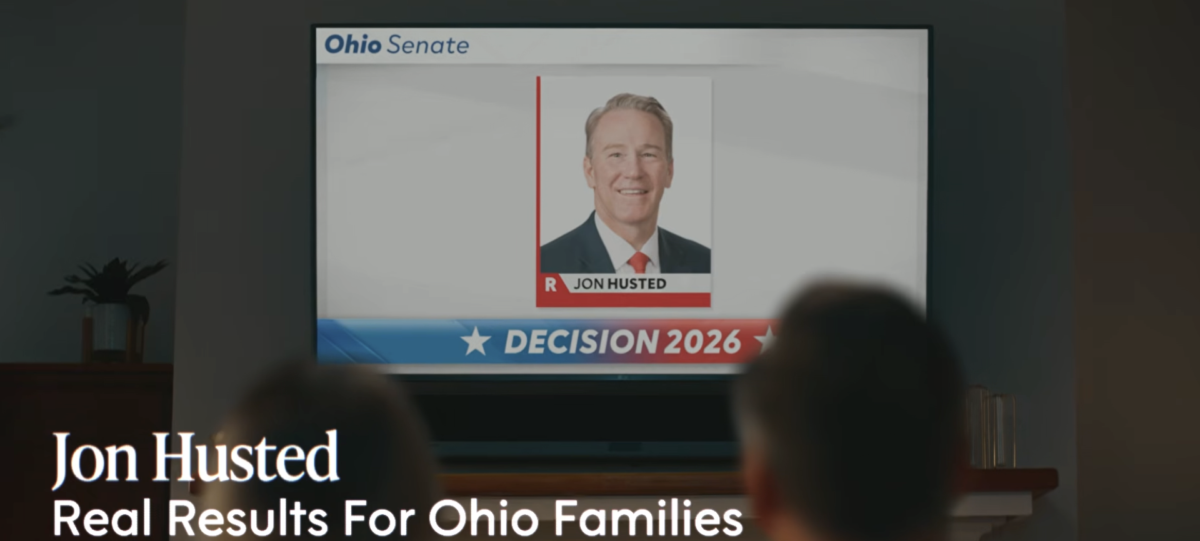
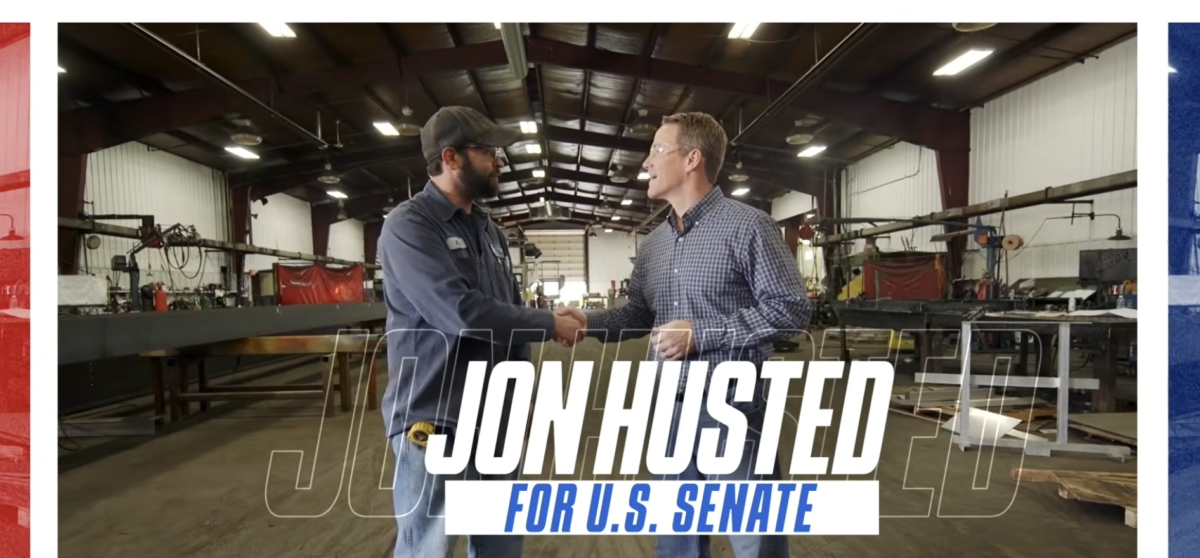
To boost Senator Jon Husted, who is in a tight race to keep his seat, some Republicans who were making a jobs pitch have pivoted to focus on socialism.

Emily Davies, The New York Times

Oct. 19, 2026, 5:03 a.m. ET

Just two volunteers showed up on a recent weekday at a Republican Party campaign office near Cleveland that in 2024 was brimming with activity every night.

One of the two, Tanya Karabanovs, 54, sat among stacks of untouched yard signs and brainstormed new ways to convince her neighbors to vote for Republican candidates such as Senator Jon Husted, who was appointed in 2025 to finish the term of Vice President JD Vance. Her most recent idea: stuffing chocolate bars into goodie bags with leftover campaign literature.

“This is really a weird cycle,” said Ms. Karabanovs, who recalled at least 30 volunteers packing into the office each day in 2024. “There’s no way to feel confident about any of the races, honestly.”

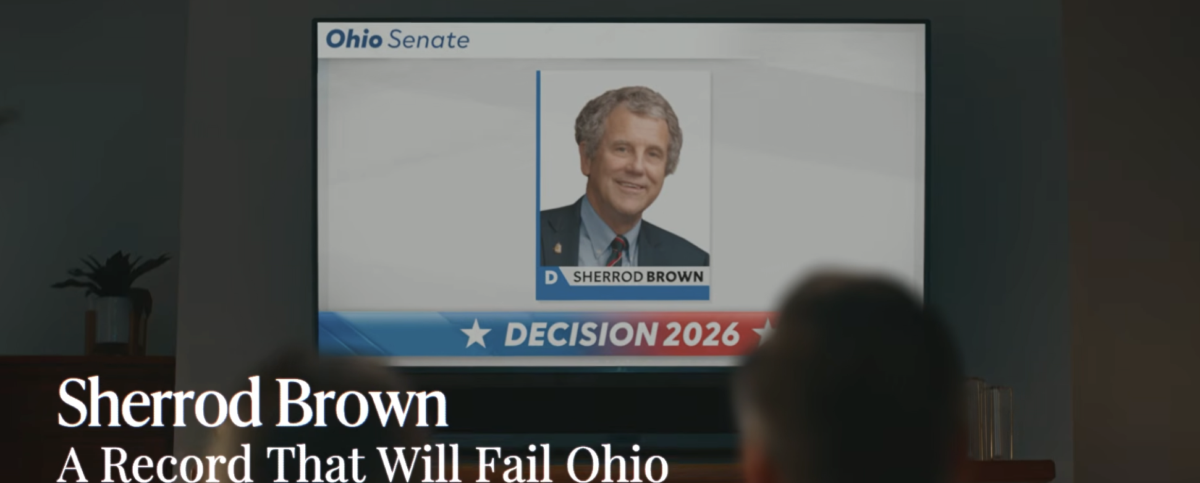
Many of the Republican volunteers trying to keep Ohio’s Senate seat red started the summer making the case that, despite rising prices, Mr. Husted was better suited to fix the economy than his Democratic challenger, the former senator Sherrod Brown. But when it became clear that the message wasn’t landing, they began to pivot.

Some, like Ms. Karabanovs, got creative. The political PAC for Americans for Prosperity, a prominent conservative advocacy group that deploys thousands of door-knockers across the state, switched its script to the threat of socialism — and organizers quickly noticed a difference.

“I wouldn’t like that,” said Nikki Cvetkovic, 77, after opening her door in a working-class suburb of Youngstown and inspecting a pamphlet with a picture of Brow next to the words, “SOCIALISM THREATENS YOUR FREEDOM.” She said she would cast her ballot for Mr. Husted.

Polls have shown Mr. Brown running ahead of Mr. Husted in one of the most closely watched races of this cycle. But many conservatives across the state believe they can pull off in the final two weeks what Republicans have done better than Democrats for the last 10 years: defy expectations on Election Day.

The modern-day Republican Party is built on upsets. Twice, polls showed Mr. Trump losing the presidential election only for him to triumph, cementing the MAGA movement’s staying power and underdog status. The question now is whether the G.O.P. can do it again, at a time when Mr. Trump is not on the ballot and his popularity is historically low.

The answer lies on the ground in unexpected battlegrounds, including Iowa and Ohio, which have swung to the right over the last decade but this year have shown signs of shifting back. In these states, as the Republican Party has struggled to defend Mr. Trump’s handling of inflation, the war with Iran and tariff policies, local campaigns and committees have leaned into depicting Democrats as dangerously far to the left — a last-ditch gambit to persuade their voters not to stay home or break the other way.

In a historically expensive midterm cycle, the Republican Party apparatus has poured more money into Ohio’s Senate race than all but one other contest, spending more than $277 million as of Saturday, according to AdImpact. At least a third of that spending has gone toward negative advertisements about Mr. Brown, many of which depict him as part of the far-left wing of the Democratic Party.

At Mr. Trump’s rally in Youngstown on Monday, he called Mr. Brown the “candidate of the Marxists, the communists, the anti-American radicals who want to tear down America’s heritage.”

It may not be enough. Representative Max Miller, one of President Trump’s closest allies in the House who has been besieged by allegations of domestic violence against his young daughter and ex-wife, came out against the war in Iran on Wednesday night during a meet-and-greet at a pub in Parma, a union town south of Cleveland.

National Republicans have withdrawn campaign funds from Ohio’s First Congressional District, where they had hoped to unseat a Democrat.

And a Republican National Committee operative circulated an email this week with data from Ohio showing Democrats outperforming Republicans in early vote, absentee votes and ballot requests compared with 2022 and 2018, according to an email reviewed by The Times.

Democrats in Ohio remain optimistic about returning Mr. Brown to the Senate, mostly because of Mr. Trump’s low approval rating and the deteriorating economy. But they also have benefited from Mr. Husted’s struggle to introduce himself to voters since he took office 21 months ago.

A former lieutenant governor and member of the House known for his outward reserve, Mr. Husted has tethered himself for much of the year to Mr. Trump, but he has also spent significant time describing his biography, including his time as a college football player and his upbringing as the son of a local factory worker focused on bringing jobs to the state.

Republicans, including Mr. Husted, are bracing for narrow margins on Election Day.

“We have a tough race, there is no doubt about that,” Mr. Husted said at an event last week at a G.O.P. field office in Mahoning County, which sprawls across three units of a strip mall in a region that once powered the country’s steel industry. “Midterm elections are tough.”

Mr. Husted had drawn a full house to the outpost in the Youngstown area, with supporters crammed between a plaque celebrating the Second Amendment and boxes of pizza. The crowd cheered when he took the lectern. As he spoke, rows of people nodded along and held up their phones to snap pictures.

“Find someone you haven’t talked to in a while, call them,” Mr. Husted continued. “You tell them I told you to call and ask them to vote, tell them that you spent time with me.”

Sitting in a plastic chair and listening along was Doris Layfield, who works at the board of elections in Mahoning County. She said she had knocked on doors for Mr. Husted and that she had liked what he said in person.

“Honestly, it’s really kind of scary,” she said. “If he doesn’t win, I really do feel like we will be living under communist rule.”

Mr. Brown, who was defeated in 2024 after three terms in the Senate, lost Mahoning County for the first time that year. The margin was just 220 votes.

He is aware that his victory is far from assured in a state that Mr. Trump won by 11 percentage points the same year he was unseated. He also seems to know that Republican claims that he’s a radical could resonate among Ohio’s increasingly conservative voters. He cut one ad, for instance, that responded to attacks from his opponent and an Elon Musk-backed PAC regarding transgender issues.

Mostly, though, Mr. Brown is running on the same progressive populism that has defined his political career since the 1970s.

In speeches at union halls, Mr. Brown talks about how the economy is “rigged,” says Congress is controlled by insider trading and describes Mr. Husted as a “special interest guy in Washington” who is detached from working-class people. He has also targeted Mr. Husted for his support for investments in data centers while he served in state government.

Aware of the resonance of the issue in Ohio, Mr. Husted sponsored a bill that passed in the House last month that encourages states to make data centers pay for higher energy costs, though it would not compel them to do so.

Back in the Youngstown area, Donovan O’Neil, a senior adviser in Ohio for Americans for Prosperity’s political PAC, walked up to a house with an American flag hanging from its porch. Barb Delaney, 65, a part-time bookkeeper, answered.

“Are you planning to vote?” Mr. O’Neil asked.

“Oh hell yes,” said Ms. Delaney, who was wearing a Detroit Lions T-shirt. “For Sherrod.”

Mr. O’Neil was not ready to walk away. He said he’d like to ask Ms. Delaney, a selfidentified Democrat, a follow-up question: “Are there concerns for you with the rise of socialism, the Democrat Socialists of America?”

There were some, she said. But Ms. Delaney was far more incensed this year about data centers, and she blamed Mr. Husted. Because of a nearby development, she said, her energy bill, which includes heat for her pool, had surged from $200 a month to almost $500 — by far the highest it had been in the 28 years she had lived in her current home.

“My electric bill is skyrocketing,” she said. “Nobody wants data centers around.”

Then, referring to Mr. Husted, she added: “I will not vote for that man. I would never.”

Mr. O’Neil listened, and after a few more attempts to engage her, he continued down the block.

Emily Davies is a political correspondent for The New York Times.
ICYMI From The Wall Street Journal: Alaska Considers Economic Suicide

The state has prospered under Trump, and the vulnerable Sen. Dan Sullivan deserves credit.

Kimberly A. Strassel, Wall Street Journal

Oct. 15, 2026 5:32 pm ET

Wasilla, Alaska

‘Build the line! Build the line! Build the line!” The chant roars through the sports center as Sen. Dan Sullivan revs up the crowd. It’s unleashed again when President Trump occupies the stage for his Tuesday midterm rally.

The crowd is cheering a proposed 800-mile liquefied-natural-gas pipeline that would mean jobs, energy and a cash bonanza for the state. It’s a project politicians have failed to deliver for decades, but it’s tantalizingly close to approval. That is, if Alaskans don’t vote on Nov. 3 for political and economic suicide.

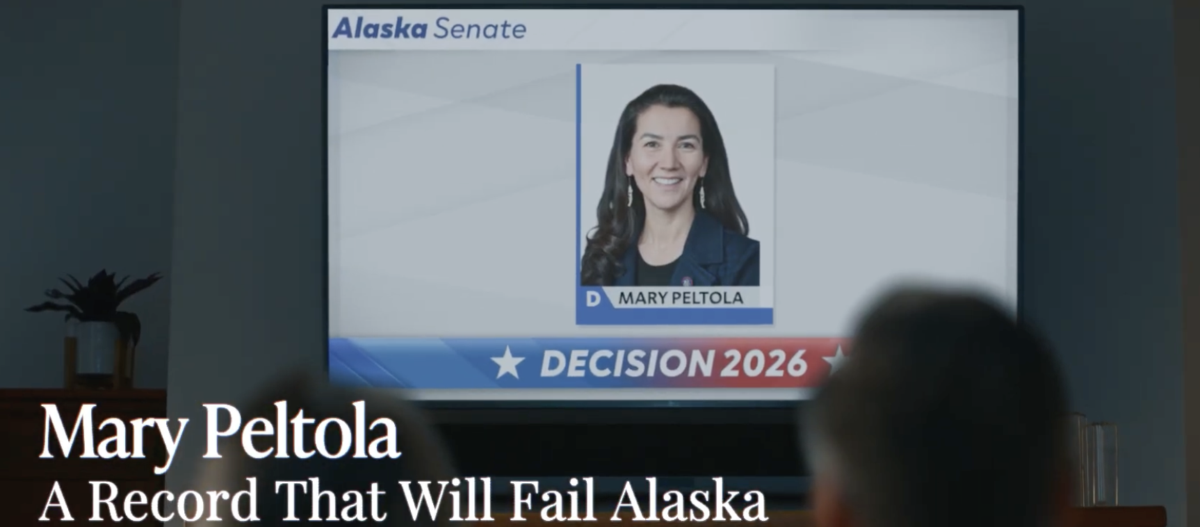
That’s the choice in the Senate election here, the message the incumbent, Mr. Sullivan, needs to land if he wants to beat Democrat Mary Peltola. Alaskans are as bitter as lower-48ers about affordability (prices are even higher in this remote state), and many voters are unenthusiastic about rewarding the party in charge. Mr. Sullivan’s mission is to remind Alaska—a state almost wholly at the mercy of federal policy—that things could be worse. That a vote for Mrs. Peltola is a vote to re-empower a left determined to kill the Alaskan economy. And a vote to dismiss the only Alaskan senator with the president’s ear.

That’s no easy feat given an opponent who is capably capitalizing on short voter memories. Mrs. Peltola is the state’s best-known Democrat—having represented Alaska in the House from 2022 to 2025. Yet on the stump you might not know she’s ever heard of Chuck Schumer. She’s leaning into her Native Alaskan roots, positioning herself as uniquely cognizant of the state’s needs. She excoriates “politicians in D.C.” like the “self-dealing” Mr. Sullivan as “corrupt” and “rigging the system” against Last Frontier residents. At events, she blames Trump policies, tariffs in particular, and Mr. Sullivan for Alaska’s price problems. She praises prior Republican leaders—like her House predecessor, the late Don Young, for having put “Alaska first.”

Mr. Sullivan’s challenge is to refute this remarkable rewrite of recent history. Two years ago, Alaska faced an economic cliff. Joe Biden spent four years imposing the environmental left’s agenda on the state, issuing more than 70 orders and actions against its economy. He banned oil and gas leases, mining projects and timber harvests. He locked up land and fisheries and barred new roads. His paltry defense budgets starved Alaska’s military installations. In a state where nearly all the economy is based on oil and gas, the military, mining and seafood, this was an economic death sentence.

Mrs. Peltola served as a loyal assistant for 21⁄2 of those years. She voted her party roughly 90% of the time, including votes to kill her own state. She voted against a bill to mandate more oil and gas leases offshore and in the National Petroleum Reserve. She voted against loan guarantees for the LNG project. In 2024, when a bill she co-sponsored to reverse the Biden administration’s oil lockup in the Arctic National Wildlife Refuge and the National Petroleum Reserve finally came up, she bowed to pressure and voted “present.”

That was when she bothered to show up. Mrs. Peltola’s short House career was marked by chronic absenteeism. Records show she missed 17.2% of the votes in the 118th Congress—mirroring the 18.6% of votes she missed in her 10 years in the Alaska House. Maybe that’s why she failed to get a single bill signed into federal law, even under a Democratic administration. (Nick Begich Jr., her successor, has shepherded nine bills into law this term.)

Alaska’s nightmare ended with Mr. Trump’s return to office. Elevated prices aside, things have rarely looked more optimistic for the 49th state. On stage, Mr. Sullivan rips up his list of those 70 Biden actions—a document he entitled the “Last Frontier Lockup”—to riotous applause. He notes that Mr. Trump has put unrelenting focus on Alaskan prosperity and recounts the progress.

On Inauguration Day Mr. Trump issued an order entirely dedicated to Alaska that rescinded Biden policies and ordered federal agencies to maximize the state’s economic opportunities. The feds have restarted the Arctic National Wildlife Refuge. They’ve thrown open the National Petroleum Reserve and held a record-breaking lease sale. New fields are coming online, filling the pipeline. Washington is streamlining permits, and oil players are rushing back north.

The Trump team approved the Ambler Road project, opening access to a rich mining area. It enacted regulatory fishing reform. Its roadless rule repeal would reopen the Tongass National Forest. A military buildup is sending money and jobs for missile defense, base upgrades, and (belatedly) home ports for four icebreakers in the only state with sea ice. And a real chance at the “line,” the LNG project. Mr. Trump is vowing a $50 billion South Korean investment, a deal that isn’t finalized but is giving Alaskans real hope.

What Mr. Sullivan can’t publicly say but savvier Alaskans understand is that these gains come down to his personal relationship with the president. Mr. Trump has a special dislike for Sen. Lisa Murkowski, given past votes against his agenda and in favor of convicting him in his 2021 impeachment trial. If Mr. Sullivan goes away, so does Alaska’s line to the presidency.

Would the administration continue its existing efforts? Maybe. Would it grant further favors? Not for a Murkowski-Peltola ask. Might the president visit retribution on that duo? Quite possibly.

“Voters are really starting to understand the ramification of a Sen. Sullivan not being in D.C.—just how negatively it will affect this state,” says Kevin Greene, senior adviser in Alaska for Americans for Prosperity Action, which has a team of dozens knocking on doors to remind voters of the stakes.

Mr. Sullivan faces two opponents: Mrs. Peltola and the state’s ridiculous ranked-choice voting system, which the Democrats are gaming. The dirty tricks include “Decoy” Dan Sullivan, a Peltola donor now running as a Republican, who will share the November ballot with the incumbent. Republicans are feverishly trying to educate this Republican state on how to fill out the ballot in a way that doesn’t accidentally elect the Democrat. If Mr. Schumer becomes Senate majority leader, it could be thanks to Alaska skullduggery.

The good news for Mr. Sullivan: Republicans are tuning in. The Trump team wisely bypassed purple Anchorage and Fairbanks to rally here, in the Mat-Su Valley, the state’s most conservative borough. It paid off. Trump enthusiasts lined up in the dark on Tuesday morning, waiting hours for the president’s afternoon talk. They crammed into every available space in this center, with many more braving the cold to watch outside on a big screen. The president was his usual winding self, but managed to impart the key message: Vote for Mrs. Peltola, and this state is toast. We’ll see if Alaskans choose wisely.

Write to kim@wsj.com.

##

AFP Action Michigan’s Tim Golding On Fox & Friends!

<

Reuters Exclusive: On Michigan doorsteps, Republicans sell Democrats-as-extremists message with mixed success

Nathan Layne, Reuters

September 26, 2026 6:04 AM EDT

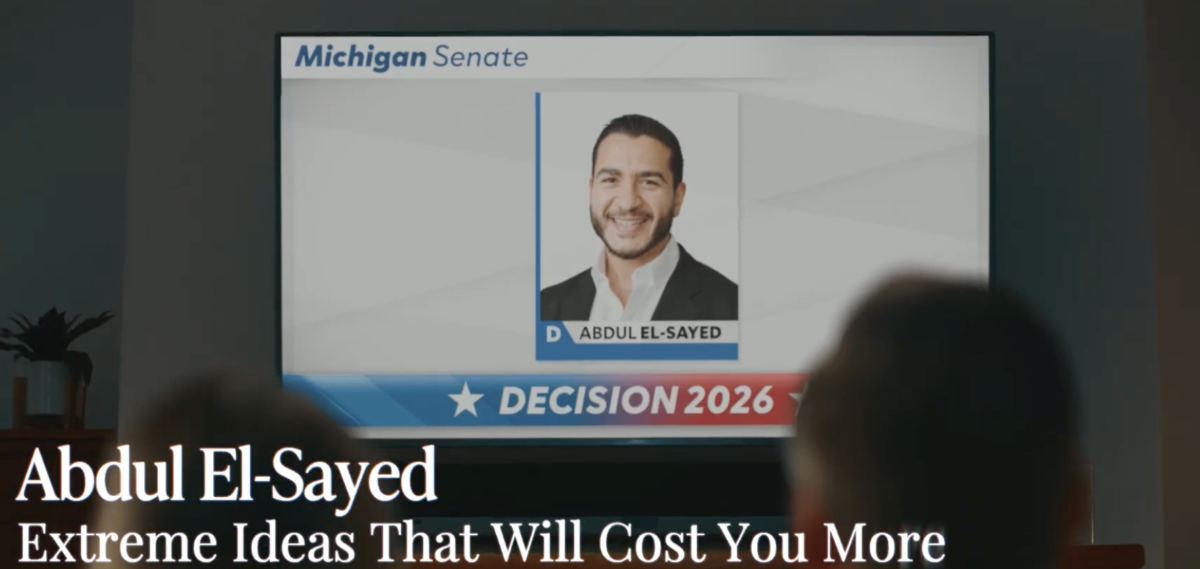
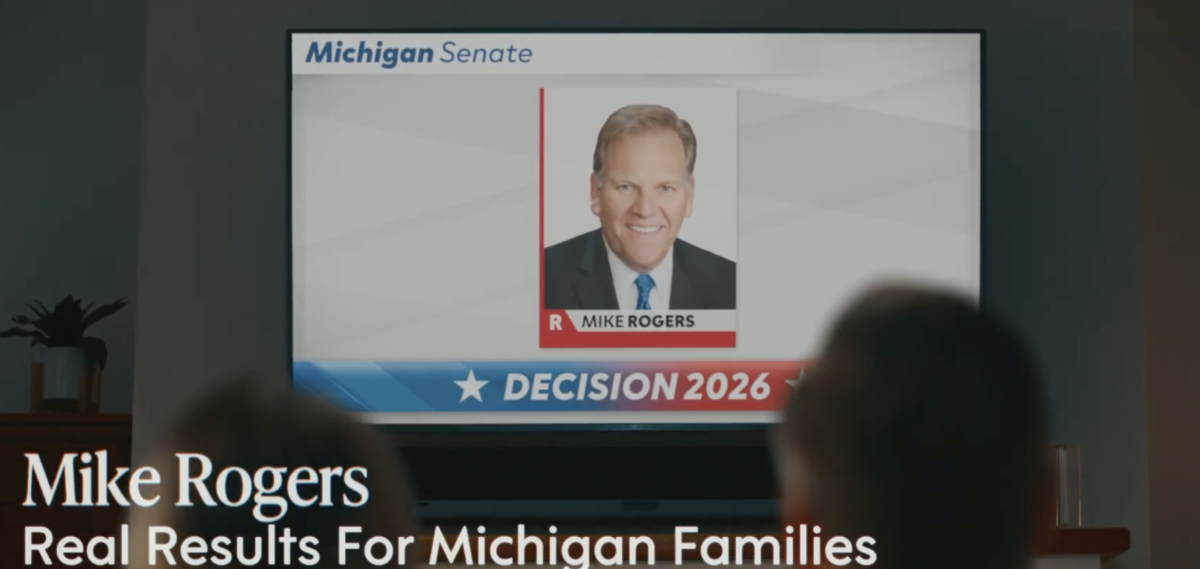
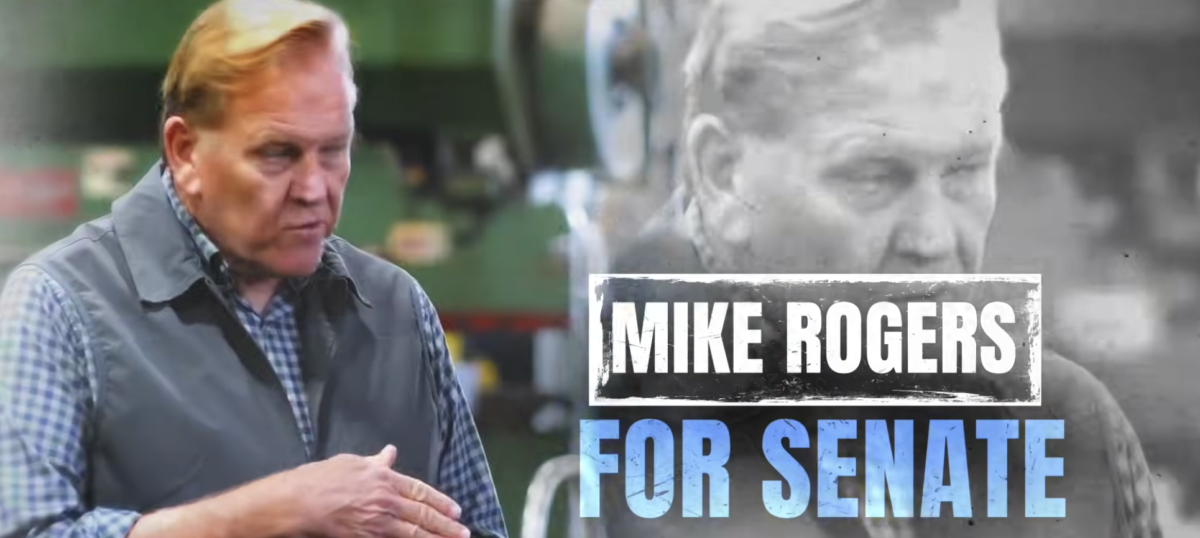
LIVONIA, Michigan, Sept 26 (Reuters) – The pitch was simple: Republican US Senate candidate Mike Rogers is a common-sense conservative, while Democratic rival Abdul El-Sayed is a big-government socialist aligned with the party’s left wing. 

But when a canvasser backing Rogers delivered that message to Nick Delise, a three-time Donald Trump voter in suburban Detroit, he encountered some skepticism. Though Delise said he would probably vote for Rogers, he rejected the notion that Democrats were controlled by the far left, saying the party was focused on practical solutions to voters’ problems. 

The exchange offered a first-hand look at a strategy Republicans are deploying in Michigan and other battleground states: to portray Democrats as ideological extremists who have moved too far to the left, while turning out less-engaged supporters needed to keep their congressional majorities in November. 

Reuters accompanied door-knockers with Americans for Prosperity Action, the super PAC arm of the conservative network backed by billionaire Charles Koch, in the city of Livonia last week as they sought to mobilize voters for Rogers in the tightly contested race. 

The conversations highlighted both the appeal and limits of Republican messaging. With many Americans unhappy with President Donald Trump’s handling of the economy and the war in Iran, Republicans have been struggling to find messages that will get voters struggling with the high cost of living to the polls on Election Day.

Delise, 32, had appeared an ideal audience for the pitch. An American flag hung from the porch of his modest, single-story home, two pickup trucks sat in the driveway and a pro-police “Thin Blue Line” banner was displayed in the garage. 

He acknowledged he knew little about the candidates and typically skips midterm elections, while attributing his conservative leanings to the influence of relatives in law enforcement. He complained about the cost of fueling his trucks. 

“I’m not hardcore like I have to vote Republican,” Delise told Reuters in a follow-up interview, adding that he had not ruled out backing a Democrat if he decides to vote. “I’d be open. I’m not saying there’s not a chance.” 

To be sure, many people canvassers encountered were already in Rogers’ camp, making the conversations less about persuasion than turnout. One Trump supporter in her 50s said she and two family members had already committed to Rogers, while a middle-aged man chatting in a neighbor’s yard said he would back Rogers to thwart what he described as a socialist turn by Democrats. 

Trump and his allies have sought to capitalize on recent primary victories by some left-leaning Democrats like El-Sayed to argue that the party is veering toward socialism and poses a threat to the country, a claim Democratic leaders dismiss as false and fearmongering. At the same time, Trump has called on his party to put him at the center of their election efforts to excite his base, despite his growing unpopularity. 

A Republican couple in their 80s illustrated a potential weakness in the Trump-centric turnout strategy. While the wife said she would vote for Rogers, her husband said dissatisfaction with the president had left him unsure whether he could back the Republican Senate nominee. A canvasser sought to redirect the conversation to policy differences and away from Trump. 

“People aren’t super happy with the situation in the world right now,” Tim Golding, senior adviser to AFP Action in Michigan, said in an interview. “But we try to pivot off that conversation and go back to the policies and the agenda that our candidates have, and not have a conversation about Trump as best we can.” 

ENTHUSIASM GAP 

With Trump posting weak approval ratings and not on the ballot, Republicans must mobilize supporters who might otherwise skip the midterms, when turnout typically falls by more than 10 percentage points from presidential-election levels. That historic trend is raising the stakes for the Republicans’ national door-knocking and other get-out-the-vote efforts this election. 

Democrats appear more energized, with 42% of self-described Democrats saying they are “very enthusiastic” about voting, compared with 28% of Republican voters, according to the latest Reuters/Ipsos poll. 

In Michigan, concerns about an enthusiasm gap recently spilled into public view when a Republican working with the Rogers campaign complained about a lack of energy among volunteers for door-knocking and other activities. 

“The vibes on the ground are the worst I’ve seen in my life,” Jackson Karki, a college student who had been helping the campaign organize several northern counties, posted to X last week. “No one wants to promote candidates, no one wants to knock doors, no one wants to do shit.” 

Other Republicans dispute that characterization. In Oakland County, one of Michigan’s most important battlegrounds and home to more than 1 million registered voters, Republican Party Chair Vance Patrick said volunteer enthusiasm remains strong. 

In an interview, he said Trump was set to visit the state twice before the election on November 3, which he predicted would further encourage volunteers and boost turnout. County party organizations like Patrick’s have grown more important in Michigan as the state Republican Party’s operations have weakened in recent years. 

Patrick said the county’s top targets include roughly 20,000 Jewish voters, a key constituency for Rogers given El-Sayed’s opposition to military aid for Israel and his characterization of Israel’s actions in Gaza as genocide. It is also chasing 38,000 so-called sleeping giants – infrequent voters who they believe would back Rogers if persuaded to cast a ballot. 

MICHIGAN A CASE STUDY OF NATIONAL EFFORT 

Including AFP and other outside groups, Rogers’ campaign plans to knock on six million to eight million doors by Election Day, according to a person familiar with the matter, roughly double the 2024 total, when he lost the Senate race by 19,000 votes. 

The effort reflects the scale of the Republican turnout strategy nationally, where campaigns and allied groups are investing heavily in door-knocking and other voter-targeting operations amid concerns about voter enthusiasm. 

Republicans hold a $637 million cash lead nationally over Democrats across super PACs and party committees, dwarfing Democrats’ edge in candidate fundraising and potentially helping fund a more expansive turnout operation, said Brendan Glavin, OpenSecrets’ director of insights. 

Yet Democrats say money alone will not decide the race. The Michigan Democratic Party says its active volunteer ranks have grown by 267% since the primary as the party has rallied behind El-Sayed. 

Michigan Democratic Party Chair Curtis Hertel said Democrats will knock on 1.4 million doors in the campaign’s final four weeks, arguing the effort will blunt Republican attempts to shift focus away from kitchen-table issues. 

They are counting on voters like one resident in his 20s who answered the door in Livonia and, when asked whom he planned to vote for, replied simply, “Not Mike Rogers,” before closing it. 

Reporting by Nathan Layne in Livonia, Michigan, editing by Ross Colvin and Alistair Bell

AFP Action Celebrates Wins in South Dakota State Primary Races

NEWS RELEASE

FOR IMMEDIATE RELEASE: June 3, 2026

CONTACT: William Hadden, williamhadden@afpaction.com

Pierre, SD – Americans for Prosperity Action (AFP Action) congratulated its endorsed candidates in South Dakota, celebrating its wins as all three of its candidates sailed to victory in Tuesday’s primary elections. 

AFP Action endorsed the following candidates in South Dakota:

  • State Sen. Sue Peterson (SD-13) 
  • State Sen. Amber Hulse (SD-30)
  • State Rep. John Robert Hughes (HD-13)

AFP Action Senior Advisor Jennifer Beving released the following statement:

“Congratulations to Sen. Peterson, Sen. Hulse, and Rep. Hughes on their victories this week. All of them have consistently fought to pass sensible policies in the legislature that will keep South Dakota on the right track, whether it’s truth in taxation, protecting jobs, or supporting regulatory oversight like the REINS Act. Voters want common sense in our state government, and we look forward to supporting our three candidates in November and into next year to make that common sense a reality.”